Designing a new kitchen layout comes with a range of challenges, and storage space is usually near the top of the list. Homeowners often pursue a remodel when a space begins to feel cluttered, so one of the primary goals — especially in kitchens — is to maximize storage within the same square footage.
Among the many ways to optimize storage while maintaining a clean appearance, pocket doors are a versatile option with a wide range of applications.
What are pocket doors?
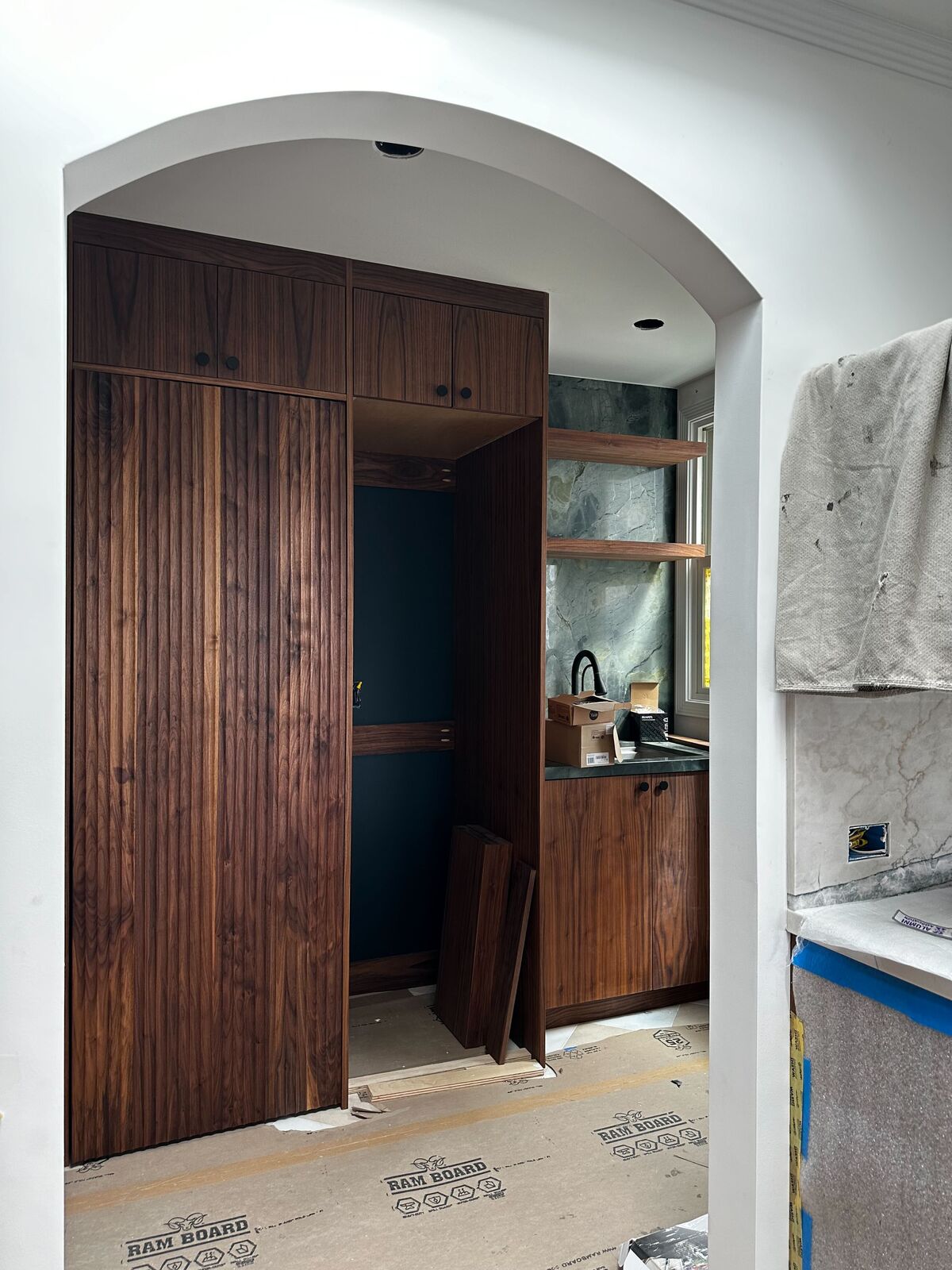
Even if the term doesn't ring a bell, you've likely seen pocket doors before. They're hung from a wall and slide along a track, designed to disappear into the wall (or into the cabinet itself) when opened.
Pocket doors originated in Victorian homes, where they separated formal seating areas and entryways. In modern kitchens, pocket pantry doors can hide a walk-in pantry, conceal a coffee station, or tuck away small appliance storage — all while keeping the kitchen looking clean when everything is closed up.
The space savings are real. A standard swinging door can consume 10 square feet of floor space when open, plus all that awkward dead space behind it. A pocket door eliminates both problems. For a walk-in pantry with a standard door, you'd lose shelving space just to make room for the door swing. A pocket pantry door removes that trade-off entirely.
Pocket doors vs flipper doors
These get confused a lot, so it's worth clarifying.
Flipper doors lift open and retract out of the way, similar to a garage door. They're often used for overhead storage or for concealing built-in appliances. Pocket doors, on the other hand, open outward and then slide back into the cabinet space on a track. Because they retract into the cabinet, pocket doors don't take up any space outside the cabinet when open.
Both use ball bearings or track systems to move doors out of view. The key difference: flipper doors move vertically, pocket doors move horizontally.
Why pocket pantry doors work
The two biggest advantages are the clean look and the space-saving design. When you're working with limited square footage or just don't like the visual clutter of open doors, pocket doors solve both problems.
Full-size pantry pocket doors can be built to match your wall, effectively camouflaging the pantry entrance for an even cleaner look. Alternatively, you can go the opposite direction — use a bold color, a textured finish, or frosted glass to make the pantry door a design feature in its own right.
This is where custom cabinet construction matters. With standard modular cabinets, pocket door options are limited to whatever sizes the manufacturer offers. With custom cabinets, the pocket door is built to fit your exact opening, with whatever finish or material matches your kitchen.
Ideas for using pocket doors in your kitchen
The walk-in pantry is the most common application, but pocket doors work well in smaller, more creative ways too.
A hidden coffee station is one of the most popular requests. Smaller pocket doors in a kitchen cabinet can conceal your coffee setup — espresso machine, grinder, mugs — and slide open when it's time to brew. To take it further, you can add a roll-out shelf inside the cabinet to make the water tank easier to access. When planning the location, think about proximity to your sink (for filling) and trash bin (for grounds).
Other applications include concealing a home bar, hiding a microwave or toaster oven, or creating a "command center" cabinet for charging devices, mail sorting, and household paperwork — all hidden behind pocket doors when not in use.
What do pocket doors cost?
A full-size pocket door used for entry into a large pantry room typically runs between $1,000 and $3,500, depending on materials, hardware, and finish. That includes the door itself, the track system, and installation.
Pocket doors used within cabinets — for coffee stations, appliance garages, or smaller storage areas — cost significantly less and are a standard option that custom manufacturers like DodiHome can add to any cabinet project.
The most important factor in the cost is hardware quality. Soft-close and soft-open mechanisms are worth the investment. Cutting corners on tracks, rollers, or installation quality leads to frustrating repairs down the line.
For a broader look at how custom cabinet pricing works, see our pricing page.
Choosing the right hardware
Wherever you install pocket doors, invest in the hardware. A soft-close and soft-open frame kit prevents slamming, reduces wear on the track, and gives the door that smooth, high-end feel when it opens and closes.
The track system is the foundation. Ball-bearing tracks are more durable and quieter than plastic roller systems. For heavier doors (solid wood, glass panels), make sure the track is rated for the weight — an undersized track will feel sluggish and eventually fail.
If you're working with a custom cabinet manufacturer, the hardware selection is usually part of the design process. At DodiHome, we spec the track and soft-close systems based on the door weight and size, so you don't have to figure it out yourself.
Getting started
Pocket doors are one of those details that make a kitchen feel intentional — everything has a place, and the kitchen looks clean even when fully stocked. Whether you're planning a walk-in pantry, a hidden coffee station, or just want to tuck the microwave out of sight, pocket doors are worth considering.
DodiHome manufactures custom cabinets locally in the Bay Area, including pocket door cabinets built to your exact specifications. See how the process works on our how it works page, or explore what's possible in our project gallery.