People spend weeks choosing cabinet colors, countertop materials, and layouts. Then they pick handles in about five minutes. That is a mistake. Cabinet handles affect how your kitchen looks, how it feels to use, and how the whole design comes together.
Handles are one of the few elements you physically interact with every time you walk into your kitchen. You grab them dozens of times a day. The shape, size, finish, and placement all matter more than most people expect. And if you are building custom cabinets, you have the opportunity to get this detail exactly right.
Handle styles
There are five broad categories of cabinet handles. Each one creates a different look and suits different kitchen styles.
Bar pulls
Bar pulls are the most common handle in modern kitchens. They are simple, straight, and clean. A bar pull creates a horizontal or vertical line on the face of the door, which gives the kitchen a sense of order. They work well on both drawers and doors, and they come in a wide range of lengths to suit different cabinet widths.
Knobs
Knobs are compact, versatile, and easy to install. A single mounting point means they work on virtually any door or drawer. They tend to suit traditional and transitional kitchens, though a simple round knob in a matte finish can work in a modern space too. Knobs are generally best on doors rather than wide drawers, where a pull gives you better leverage.
Cup pulls
Cup pulls, sometimes called bin pulls, are a popular choice for drawers. They sit in a shallow recess and give you a natural grip. They show up most often in transitional and traditional kitchens, and they pair well with shaker-style doors. On upper cabinets and tall doors, bar pulls or knobs usually work better.
Integrated handles: J-pulls and finger pull channels
This is where things get interesting, and where DodiHome's European-style construction opens up options that stock cabinets simply cannot offer. Integrated handles are built directly into the cabinet door or drawer front. There is no separate piece of hardware to mount.
A J-pull is a channel routed into the top or bottom edge of the door, creating a lip you can grip to open it. The result is a completely smooth face with no visible hardware. It is a clean, modern look that keeps the focus on the material and finish of the door itself.
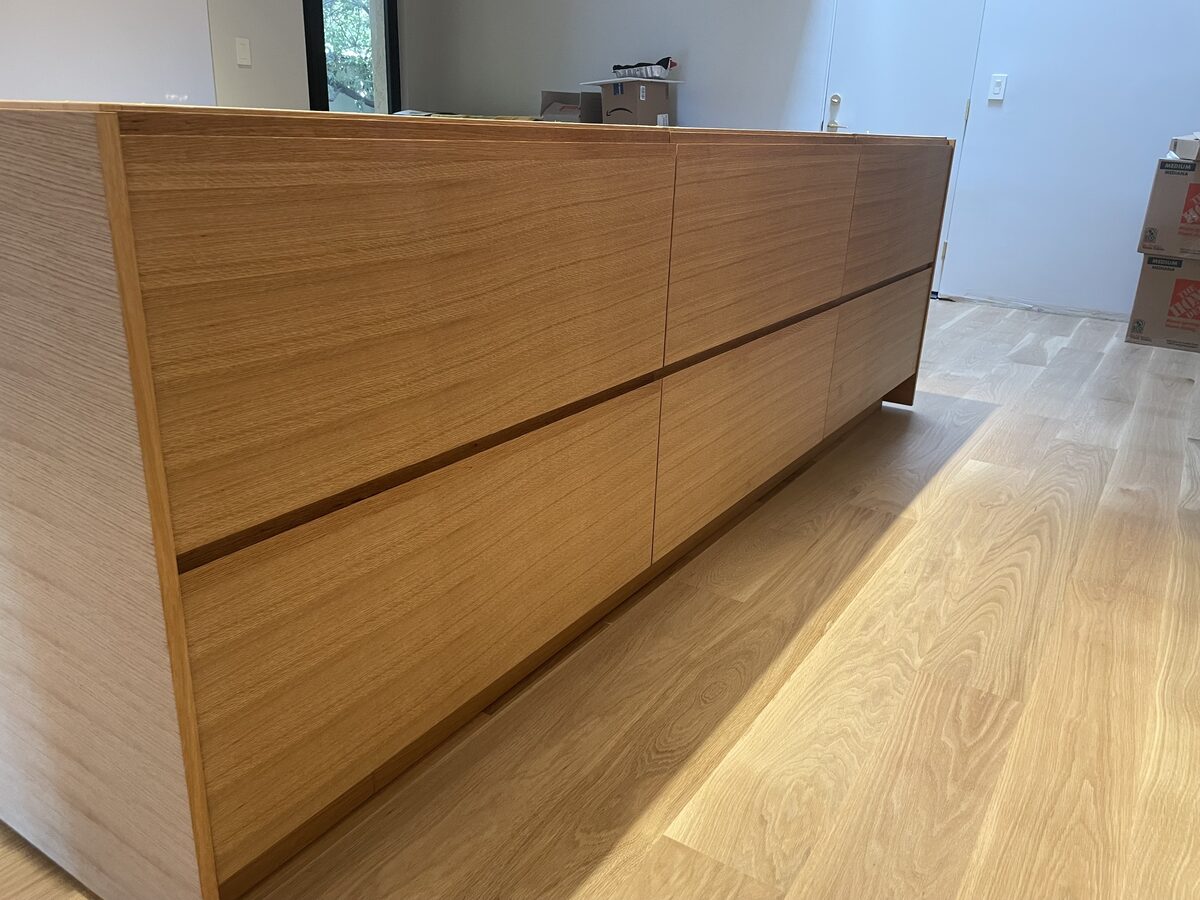
A J-pull routed into the top edge of a white oak door. No hardware, no visible seams.
Finger pull channels work on a similar principle. A narrow groove is milled along the edge of the door or drawer, giving you just enough room to curl your fingers behind it. The profile is even more minimal than a J-pull. You can see an example of this detail in the image below, where a finger pull channel runs along the base of a white oak cabinet.
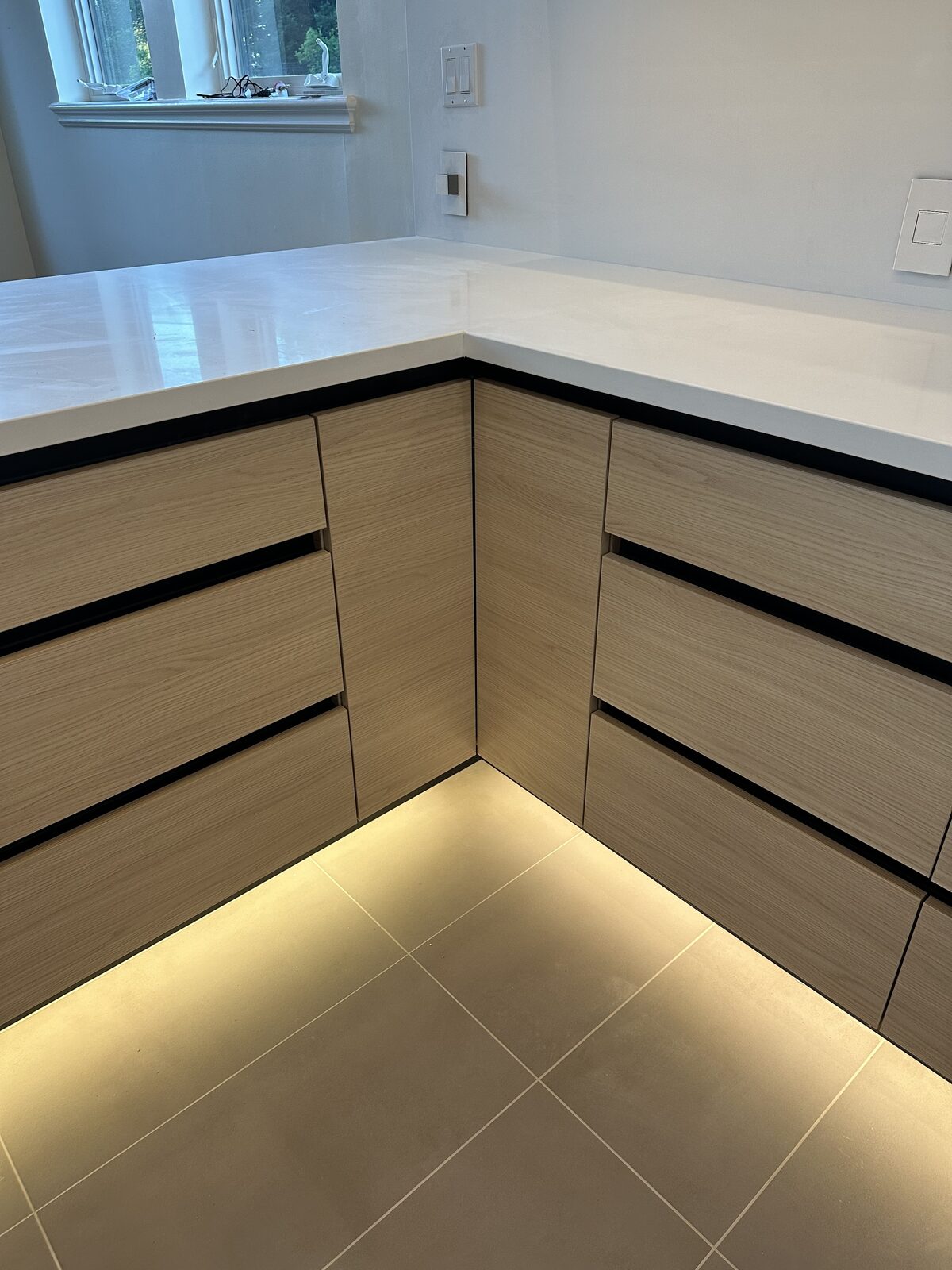
A finger pull channel along the bottom edge of a white oak drawer front.
Both of these options are built into the door during manufacturing. They require precision CNC routing and careful planning during the design phase, which is why they are rarely available from stock or big-box cabinet lines. At DodiHome, integrated handles are part of our standard offering. You can see more examples in our project gallery.
Push-to-open (handleless)
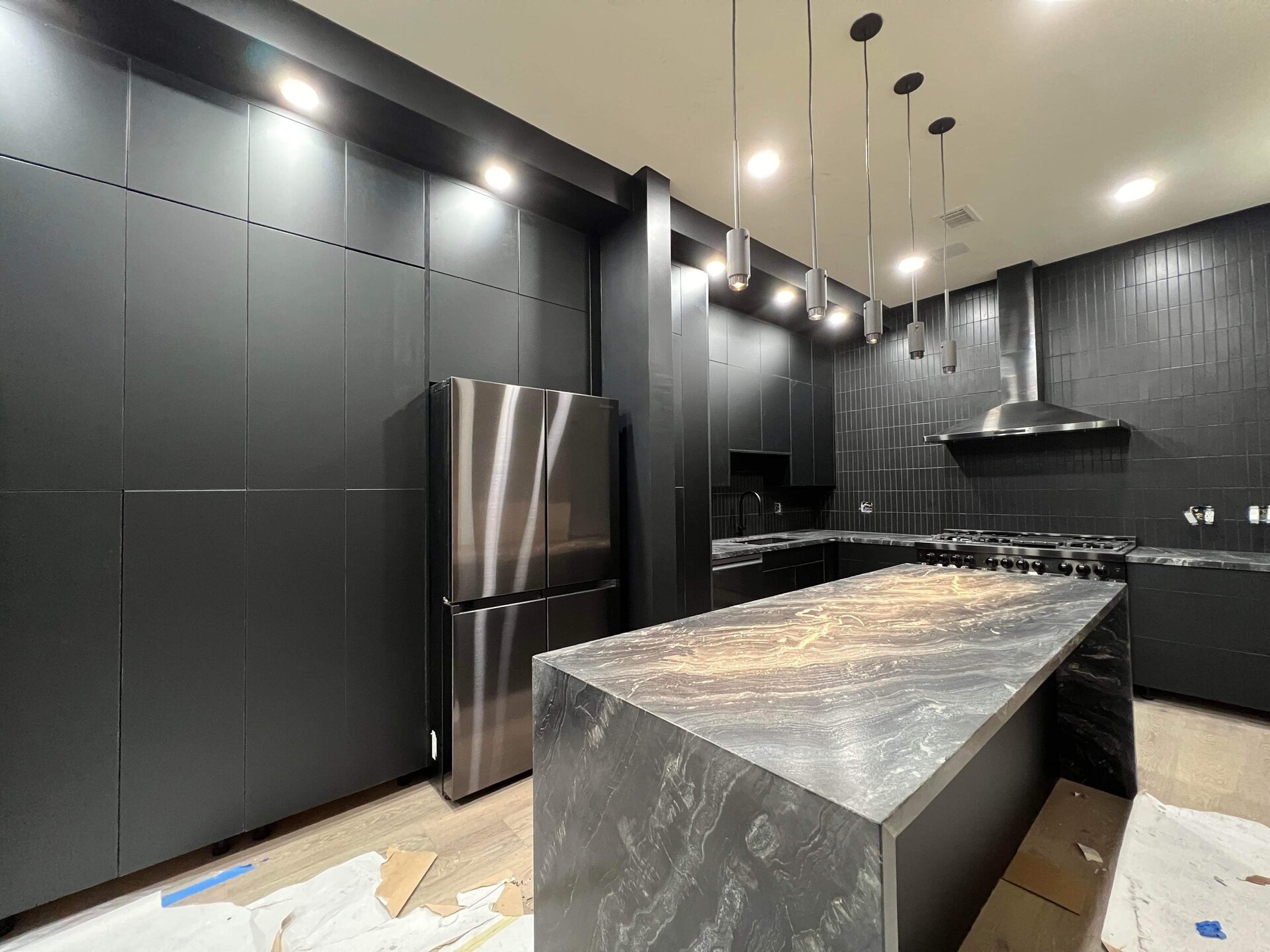
Push-to-open cabinets use a mechanical latch behind the door. You press the face of the door and it pops open. There is no handle at all. This creates the cleanest possible look, with nothing interrupting the surface of the cabinetry. It is a hallmark of high-end European-style kitchens and works especially well on tall pantry cabinets and integrated appliance panels.
Materials and finishes
If you are going with traditional hardware (bar pulls, knobs, or cup pulls), the finish matters as much as the style. Here are the most common options and how they work with different cabinet finishes.
Matte black is the most popular handle finish right now. It works with white, gray, wood-tone, and dark cabinets alike. It has staying power because it reads as neutral rather than trendy.
Brushed brass adds warmth. It pairs well with white oak, walnut, and painted white or cream cabinets. It has softened the old reputation of brass as dated, and the brushed texture keeps it from looking too polished or formal.
Satin nickel is a reliable middle ground. It is not as bold as brass and not as stark as chrome. It works in most kitchen styles and coordinates easily with stainless steel appliances.
Brushed stainless steel is the most utilitarian option. If your kitchen has stainless appliances and a clean, functional aesthetic, matching stainless handles keep everything consistent.
A good rule of thumb: your cabinet handles do not need to match every metal in the room, but they should not clash. If your faucet is brushed brass, your handles do not have to be brass too, but going with matte black or satin nickel will look more intentional than polished chrome.
Sizing guide
For bar pulls, there is a simple guideline that works well in most kitchens. On drawers, choose a pull that is roughly one-third the width of the drawer front. A 24-inch drawer works well with an 8-inch pull. A 36-inch drawer can handle a 12-inch pull.
On doors, you have more flexibility. A single pull placed vertically near the opening edge is standard. For tall pantry or cabinet doors, a longer pull (12 to 18 inches) can double as a visual accent.
There are three measurements to pay attention to when ordering hardware: overall length (the full end-to-end measurement), center-to-center (the distance between the mounting holes, which determines what will fit your doors), and projection (how far the handle sticks out from the door). Lower projection means fewer snagged sleeves and a cleaner profile.
How handle selection works with custom cabinets
With stock cabinets, you pick from whatever handles the retailer carries and hope they work with the doors you chose. With custom cabinets from DodiHome, handle selection is part of the design process from the beginning.
Our team helps you choose hardware that works with your door style, material, and finish. If you want integrated handles like J-pulls or finger pull channels, those are planned during the design phase and built into the doors during manufacturing. There is no aftermarket modification or awkward retrofit.
You can start exploring layouts and configurations in the DodiHome design app, and our team can walk you through handle options as part of the quoting process. If you want to see what different handle styles look like on real projects, browse our gallery or check our pricing page to understand how handle choices factor into the overall cost of your project.
The right handle is not just about looks. It is about how the kitchen feels in your hand, every single day. Take the time to get it right.