White kitchens dominated residential design for the better part of two decades. They photograph well, they feel open, and they became the default "safe" choice. But more homeowners are moving toward something with a little more weight. Black kitchen cabinets have gone from a bold outlier to one of the most requested finishes we see at DodiHome, and the reasons go beyond aesthetics.
Why black cabinets work
The most practical argument for black cabinets is maintenance. White surfaces show every smudge, water spot, and scuff. Black, especially in matte finishes, is far more forgiving. Fingerprints that would stand out on a glossy white door virtually disappear on a supermatte black surface. For a room that gets used as hard as a kitchen, that matters.
Beyond upkeep, black cabinets bring a sense of depth and grounding that lighter palettes can't replicate. A white kitchen can feel airy, but it can also feel sterile. Black introduces warmth through contrast, especially when paired with natural materials. It reads as intentional rather than default, and it anchors the room without making it feel heavy. That sense of permanence is part of why dark finishes hold their value at resale.
There's also the question of longevity. Trends cycle, but black has been a fixture in European-style kitchen design for decades. It's not a novelty color. Italian and German manufacturers have offered black cabinetry as a core finish for years, and what we're seeing now in the U.S. market is more of a convergence than a fad.
DodiHome's black finish options
Not all black finishes are the same, and the material makes a real difference in how the cabinet looks, feels, and holds up over time.
Our most popular black option is Mirlux Black Supermatte, manufactured by Alvic, a Spanish materials company that supplies surfaces to kitchen manufacturers across Europe and the U.S. This is a thermofoil finish with a soft, velvety texture and virtually no light reflection. It resists fingerprints better than painted or high-gloss alternatives because the Mirlux Supermatte surface is anti-fingerprint treated at the manufacturing level. If you've seen the matte black finishes on high-end European kitchens, this is the same category of material. You can see it in action in our project gallery.
For homeowners who want a painted finish instead, DodiHome offers custom cabinet doors painted in any color, including custom-matched blacks. Pairing a matte or painted black finish with the right handle style is key to getting the look right. Custom painted cabinets can be matched to any paint brand color code, so if you have a specific Benjamin Moore, Sherwin-Williams, or Farrow & Ball black in mind, we can match it. A painted finish gives you a slightly different look: smoother, with a subtle sheen that catches light differently than supermatte. It's a strong choice for transitional kitchens or spaces where you want the black to feel a bit more refined.
What to pair with black cabinets
One of the reasons black works so well is that it acts as a neutral anchor. It doesn't compete with surrounding materials the way a bold color would. Instead, it sets a backdrop that makes other elements stand out.
Black and white oak. This is one of the most natural pairings. The cool tone of white oak balances the depth of black without creating too much contrast. It's a combination that feels modern but warm, and it works in both large and compact kitchens.
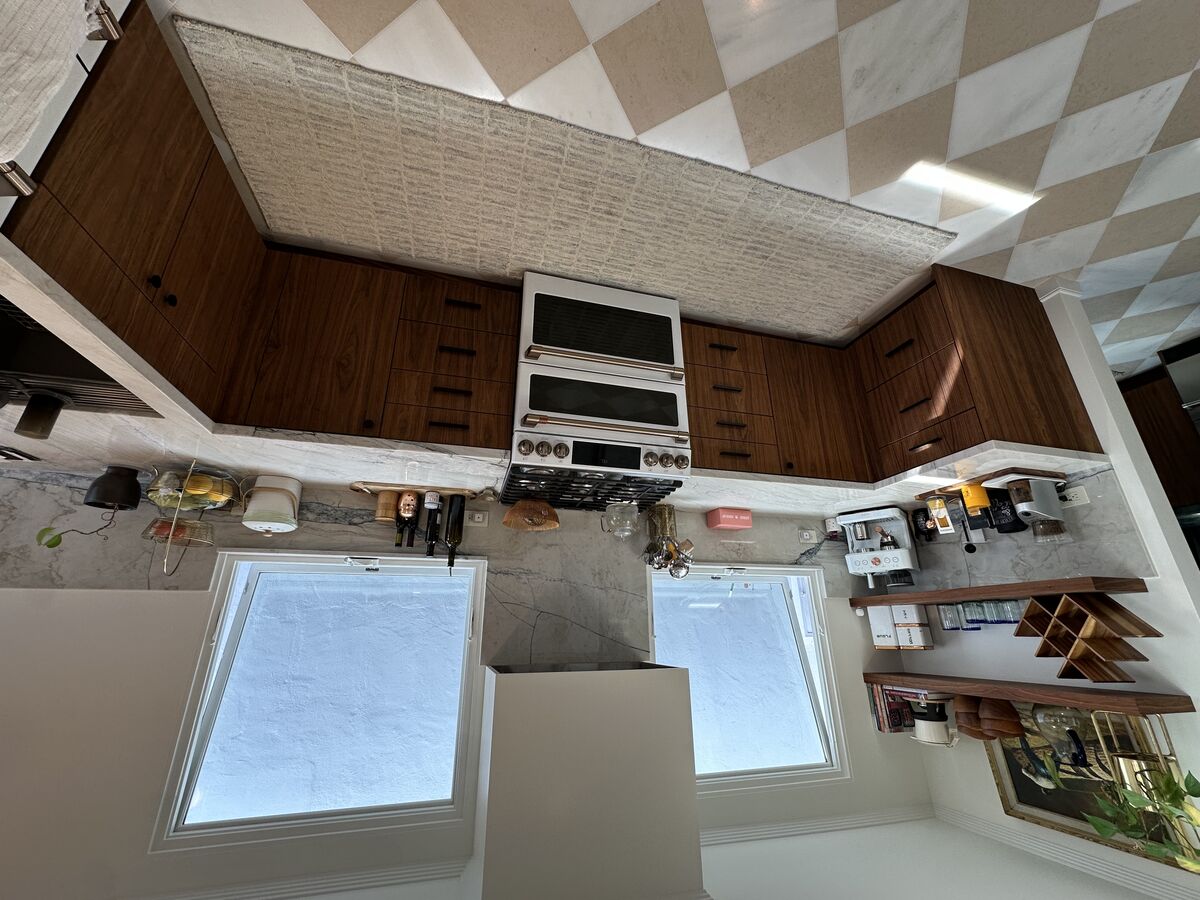
Black and walnut. For a richer look, walnut brings warmth and grain variation that plays well against flat black surfaces. This pairing works especially well when walnut is used for open shelving or a feature panel alongside black cabinetry.
Black and brass hardware. Brass or brushed gold pulls on black doors create a subtle but deliberate contrast. The hardware becomes a design element rather than just a functional piece. Matte black hardware on black cabinets is another option if you want a more seamless, monolithic look.
Black and marble countertops. White or grey-veined marble on top of black base cabinets creates one of the most classic material combinations in kitchen design. The movement in the marble softens the solidity of the black, and the contrast keeps the kitchen from feeling one-note.
Two-tone and accent approaches
Going all-black isn't the only way to use the color. In fact, some of the most striking kitchens we've built use black as one component in a multi-tone palette. Two-tone kitchens typically cost 5-10% more than single-finish kitchens because they require separate material batches, but the design flexibility is often worth the difference.
Black base cabinets with wood uppers. This is the most common two-tone approach. Black on the lower cabinets grounds the room, while lighter wood uppers keep the eye level open and warm. It prevents the kitchen from feeling enclosed, especially in spaces with standard ceiling heights.
Black island with lighter perimeter. If a full commitment to black feels like too much, using it only on the island is a strong way to introduce the color. The island becomes a focal point, and the lighter perimeter cabinets maintain brightness around the room's edges.
Three-tone kitchens. Some of our projects combine black, a natural wood tone, and a third element like white or grey. One project in our gallery pairs black supermatte base cabinets with walnut uppers and a white countertop, creating three distinct layers that each contribute something different to the space.
Grey as a middle ground
Not everyone is ready for full black, and that's where grey comes in. A dark charcoal or anthracite finish delivers much of the same visual weight as black but with a slightly softer presence. Grey still hides wear better than white, and it pairs with the same materials: wood tones, brass, marble.
At DodiHome, grey is available in both supermatte thermofoil and custom painted options. It's a good choice for kitchens with limited natural light where black might absorb too much brightness.
Lighting matters more than you think
Dark cabinets absorb light rather than reflecting it. That's part of what gives them their depth, but it also means the kitchen's lighting plan needs to work harder.
Under-cabinet lighting is nearly essential with black cabinets. It illuminates the countertop workspace and creates a visual break between the cabinet face and the counter surface. LED strip lights in warm white (2700K-3000K) work well here.
In-cabinet lighting is another detail worth considering, particularly in glass-front uppers. It adds a warm glow that softens the black and highlights what's inside.
Pendant lights over an island and recessed ceiling fixtures handle the ambient light. The key is layering: don't rely on a single overhead source. With black cabinets, multiple light sources at different heights create dimension and keep the space from feeling dark.
Hardware finish choices
Hardware is the finishing detail that ties the whole design together. On black cabinets, every pull and knob is visible, so the choice matters more than it would on a lighter door.
Brushed brass and satin gold are the most popular finishes we see paired with black. They add warmth without shine. Matte black hardware creates a flush, integrated look. Polished nickel or chrome can work too, but they introduce a cooler tone that shifts the kitchen's overall feel.
If you're unsure, DodiHome's design app lets you experiment with different hardware and finish combinations before committing. It's a useful way to see how materials interact without ordering samples.
When to go all-black vs. black as an accent
Full black kitchens work best in larger spaces with good natural light and high ceilings. In those settings, black absorbs the excess brightness and makes the room feel intentional and curated rather than washed out.
In smaller or darker kitchens, black works better as an accent. A black island, a black pantry wall, or black base cabinets with lighter uppers keeps the color's impact without overwhelming the space. The two-tone approach also gives you more flexibility if your taste changes down the road.
For a detailed look at how custom cabinet pricing works for multi-tone projects, our pricing page breaks down what drives cost at each step.
Getting started
Black kitchen cabinets are one of those choices that look more dramatic in concept than they feel in person. Once installed, they tend to blend into the room naturally, grounding the space rather than dominating it. The finish, the pairings, and the lighting plan all shape the final result.
If you're considering black cabinets for your kitchen, DodiHome manufactures custom cabinetry locally in the Bay Area with predictable timelines and real-time pricing. Start by exploring options in our design app, or request a quote to talk through your project with our team.