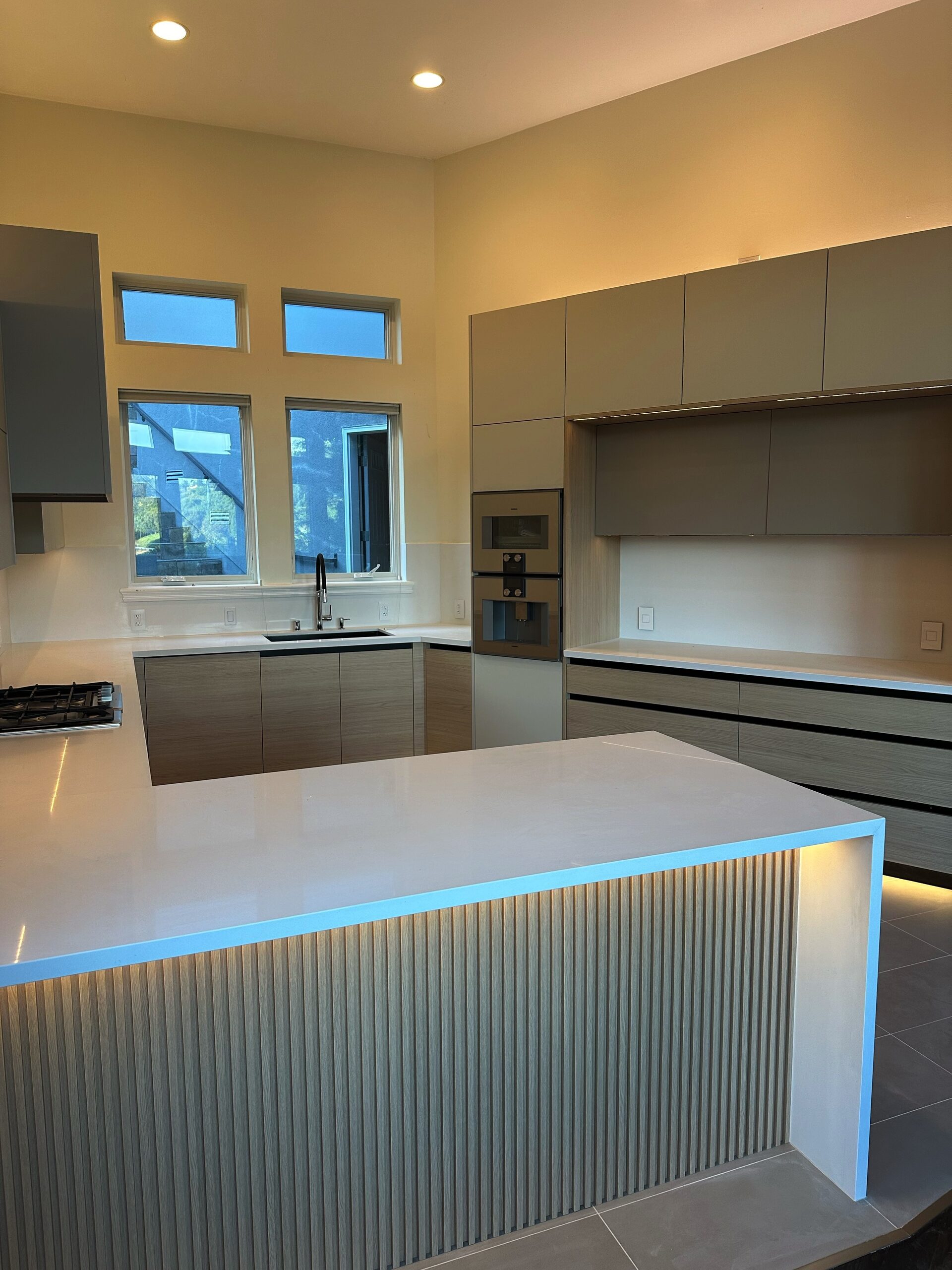
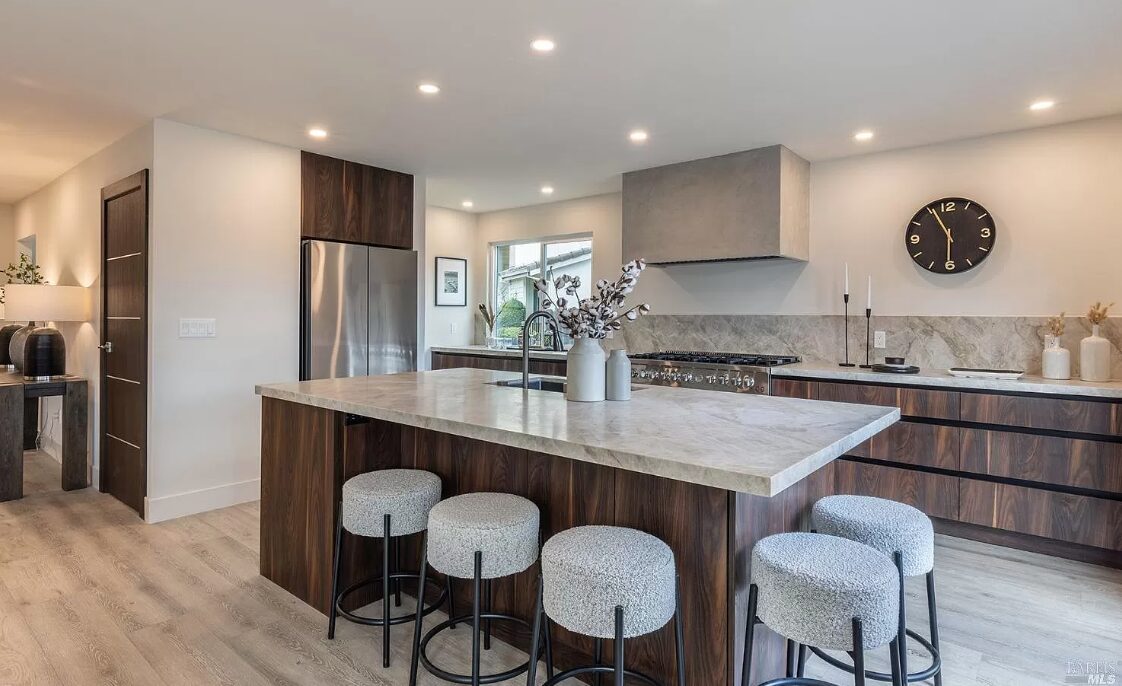
Kitchen remodels in the Bay Area follow different rules than the rest of the country. Costs run higher, timelines stretch longer, and local regulations add steps that most online guides don't mention. Whether you're updating a 1960s ranch in San Jose or opening up a compact kitchen in San Francisco, the decisions you make early will shape everything that follows.
This guide covers what Bay Area homeowners actually need to know: realistic costs, where the money goes, how to plan the work, and how to avoid the mistakes that turn a three-month project into a six-month one.
What a kitchen remodel costs in the Bay Area
The honest range is wide: $30,000 for a cosmetic refresh up to $150,000 or more for a full custom remodel. The national average is significantly lower, but Bay Area pricing reflects the reality of building here. Labor rates for general contractors run $75 to $150 per hour. Plumbers and electricians can charge up to $250 per hour. Permit fees vary by city. And premium materials are the norm, not the exception.
Here's the general breakdown by tier:
A cosmetic update (new countertops, cabinet refacing, fresh paint, updated fixtures) typically falls between $30,000 and $50,000. A mid-range remodel with layout adjustments, new cabinets, upgraded appliances, and improved lighting runs $50,000 to $100,000. A full custom remodel with structural changes, high-end materials, and custom cabinetry can reach $100,000 to $150,000 or more.
San Francisco projects specifically tend to run 20 to 30 percent higher than the broader Bay Area average, driven by tighter spaces, older buildings, and stricter local codes.
Where does the money actually go? For most kitchen remodels, cabinetry is the single largest line item at 35 to 40 percent of the total budget. On a $75,000 remodel, that's $26,000 to $30,000 in cabinets alone. Countertops, appliances, flooring, lighting, and labor split the rest. This is why the cabinet decision matters so much. It's not just the biggest visual element in the room. It's the biggest financial one too — and the one most likely to affect your home's resale value.
For a closer look at how custom cabinet pricing works, see our pricing page.
Start with cabinets. Everything else follows.
Most homeowners start thinking about countertops, backsplash tiles, or appliances. But cabinets define the kitchen. They set the layout. They determine your storage. They establish the visual style of the room. Get the cabinets wrong, and no amount of marble or designer hardware will fix a kitchen that doesn't flow.
The first real decision is what kind of cabinets to buy. The options fall into three broad categories.
Stock cabinets come in fixed sizes from big-box retailers. They're the least expensive option and work well for standard-sized kitchens where dimensions happen to align. The trade-off is limited sizing, limited materials, and minimal customization. If your kitchen has unusual ceiling heights, angled walls, or tight corners, stock cabinets will leave gaps that need filler strips.
Semi-custom cabinets offer more flexibility. Manufacturers like California Closets build from a catalog of standard components but allow some modifications to sizing, finishes, and hardware. This middle ground works for many projects, though the "custom" part has limits. You're still selecting from a menu rather than designing from scratch.
Custom cabinets are built to your exact dimensions. Height, width, depth, shelf spacing, material, finish, and hardware are all specified to the project. Floor-to-ceiling cabinets that actually reach your ceiling. Drawers that fit the exact width of an alcove. No filler strips, no dead space. The cost is higher, but for kitchens where fit, finish, and material quality are priorities, custom delivers more usable space per dollar.
At DodiHome, every cabinet is dimensionally custom and built with European-style frameless construction. You can explore materials, layouts, and real-time pricing in our design app before committing to anything.
For a detailed look at construction methods and materials, visit our cabinets page.
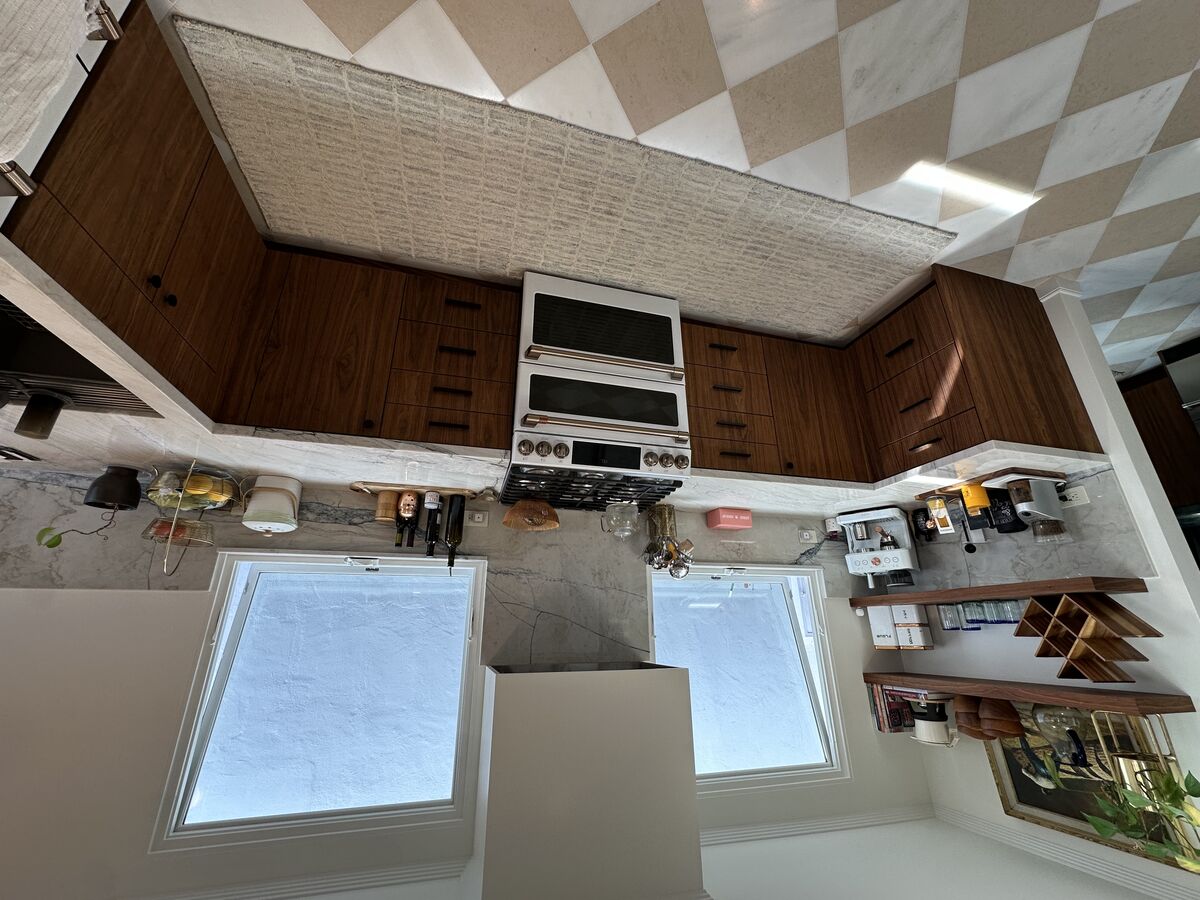
A Bay Area kitchen remodel with walnut flat panel cabinets, marble countertops, and custom floating shelves.
Permits and regulations: what Bay Area homeowners need to know
Not every kitchen remodel requires a permit, but most significant ones do. The general rule across California: if you're making structural changes, moving plumbing, relocating electrical, or adjusting gas lines, you need a permit. Cosmetic work like painting, replacing countertops, or swapping cabinets in the same footprint typically does not.
Each city in the Bay Area has its own building department with its own process. San Francisco's Department of Building Inspection (DBI) is known for thorough reviews, particularly around seismic compliance. San Jose, Oakland, and other cities have their own timelines and requirements. Permit fees generally range from $500 to $2,000 depending on project scope.
For the permit timeline, plan on a few weeks for straightforward projects and potentially several months for anything involving structural engineering, seismic review, or complex utility changes.
A few practical notes:
Replacing cabinets in the same layout typically does not require a permit. This is relevant if you're upgrading from stock to custom cabinets without changing the kitchen footprint.
If your remodel involves moving walls, adding an island with plumbing, or rewiring for new appliances, your contractor will need to pull permits and schedule inspections at multiple stages.
Always work with a licensed general contractor for permitted work. Unpermitted remodels can create problems at resale.
Title 24 energy standards apply to most permitted kitchen work in California. Your contractor should be familiar with current requirements for lighting and ventilation.
The cabinet portion of a remodel is often the piece that doesn't require permits, which means it can move forward on its own timeline while you work through the permitting process for everything else.
Planning your layout: measure first, dream second
The best kitchen remodels start with measurements, not inspiration photos. Wall lengths, ceiling height, window placement, and appliance locations determine what's actually possible. Everything else is decoration.
Start by mapping your current kitchen. Measure every wall, note where windows and doors fall, and mark the locations of plumbing, gas, and electrical. If you're keeping the same basic layout (which saves significant money by avoiding permit-heavy structural work), these measurements become the foundation for your cabinet design.
Think about your kitchen in zones rather than as a single space. Prep, cooking, cleaning, and storage each need dedicated areas with logical flow between them. The classic work triangle (sink, stove, refrigerator) still holds up as a starting framework, though modern kitchens often add zones for coffee, homework, or entertaining.
A few layout principles that consistently pay off:
Place appliances first. Your refrigerator, range, and dishwasher dictate the layout. Everything else works around them. Make sure you have counter space (landing zones) on both sides of the stove and next to the refrigerator.
Prioritize drawers over doors. Deep drawers for pots and pans, shallow drawers for utensils, and pull-out drawers in lower cabinets are more accessible than traditional shelved cabinets with doors. You'll use more of your storage when you can see and reach everything.
Don't forget vertical space. In Bay Area kitchens where square footage is limited, going floor-to-ceiling with your cabinets adds significant storage without expanding the footprint. Upper cabinets that stop a foot below the ceiling waste space and collect dust.
Design for your life, not for resale. Yes, the kitchen affects home value. But you're the one cooking in it every day. Choose what works for how you actually use the space.
If you want to experiment with layouts before hiring anyone, our design app lets you drop in walls, place cabinets, and see real-time pricing as you go — no sales call needed.
Bay Area design trends that actually hold up
Trends come and go, but a few directions have proven durable in Bay Area kitchens. These aren't fads. They reflect how people in this region actually live.
Natural wood tones and soft neutrals have been steadily replacing the all-white kitchen. Light oak, walnut, and warm wood finishes create kitchens that feel grounded and livable. If white still appeals to you, consider pairing white uppers with a warm wood base, or using a soft neutral like sand or mushroom instead of bright white.
Slab-style (flat panel) cabinet fronts continue to gain ground. They're clean, easy to maintain, and particularly effective in smaller kitchens where ornate door profiles can feel busy. Paired with minimal hardware or integrated finger pulls, slab fronts create a streamlined look that won't feel dated in five years.
Smart storage solutions matter more in the Bay Area than almost anywhere else. With average kitchen sizes smaller than the national norm, every inch counts. Pull-out pantry drawers, corner cabinet solutions, toe-kick drawers, hidden recycling stations, and vertical dividers for baking sheets and cutting boards are small additions that dramatically improve daily function.
Open concepts with defined zones remain popular, but the trend has matured. Instead of removing every wall, homeowners are using cabinetry, islands, and changes in material to create visual separation while keeping the open feel. A peninsula or island does more work than a missing wall.
Sustainability is a factor for many Bay Area homeowners. FSC-certified wood, low-VOC finishes, and formaldehyde-free plywood are increasingly standard rather than premium add-ons. If this matters to you, ask about material sourcing and finishing processes before you commit to a manufacturer.
See what these trends look like in real projects in our gallery.
Timeline: how long a Bay Area kitchen remodel actually takes
The typical timeline for a full kitchen remodel is three to six months from planning to completion. That breaks down roughly as follows:
Design and planning takes two to six weeks, depending on complexity. This includes measurements, layout decisions, material selection, and finalizing your cabinet order.
Permitting runs two to eight weeks for most projects. Simple permits can move quickly. Structural changes, seismic reviews, or complex utility work take longer.
Cabinet manufacturing depends on your approach. Stock cabinets can ship in days. Semi-custom runs four to six weeks. Traditional custom shops often quote eight to twelve weeks. At DodiHome, custom cabinet lead times range from two to four weeks for pre-finished orders and six to eight weeks with on-site finishing.
Construction (demolition through final installation) typically takes six to twelve weeks once permits are approved and materials are on site.
The single most common cause of delays is waiting on cabinets. Because cabinetry is the largest and most complex component, everything else (countertops, backsplash, flooring, lighting) depends on the cabinets being installed first. A long cabinet lead time pushes the entire project back.
This is one reason to start the cabinet process early, even before your contractor has pulled permits. Getting your design finalized and your order placed means cabinets arrive when construction is ready for them rather than the other way around.
For the full step-by-step process, see how it works.
How to get started
A kitchen remodel is a big project, but it doesn't have to start with a big commitment. The most productive first step is getting clear on your cabinet layout and budget. Once you know what the largest line item will cost, the rest of the budget becomes much easier to plan.
DodiHome's design app lets you build your kitchen layout, choose materials and finishes, and see pricing update in real time. There's no download, no account required to browse, and no sales pressure. When you're ready, one of our designers will help you refine the details.