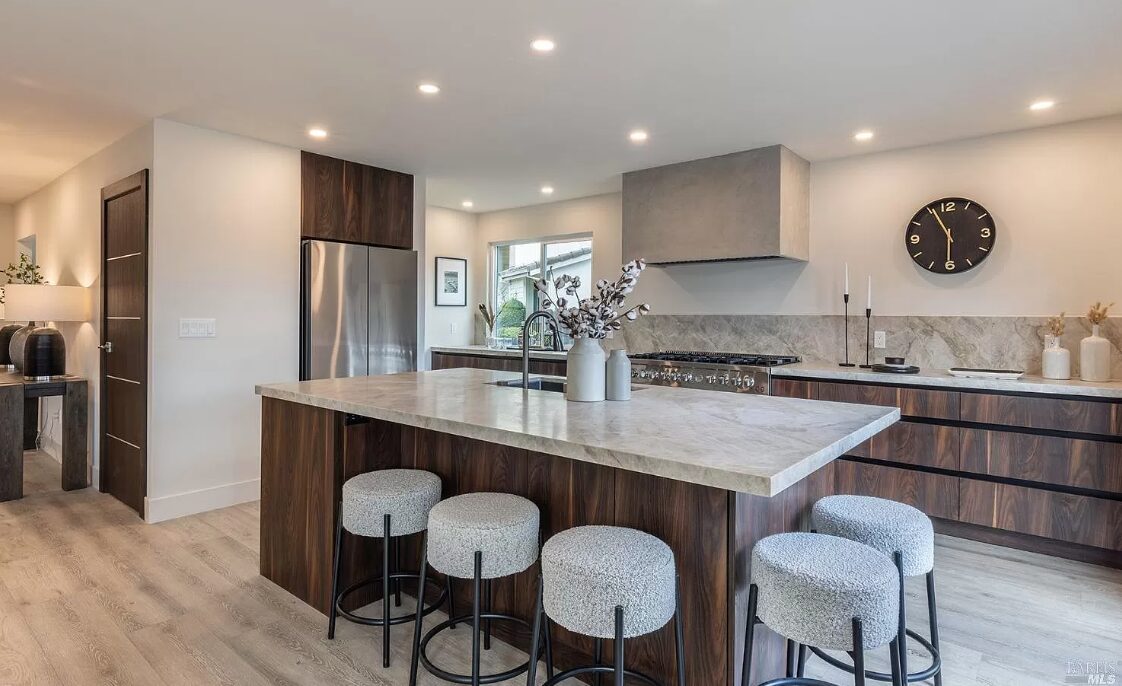
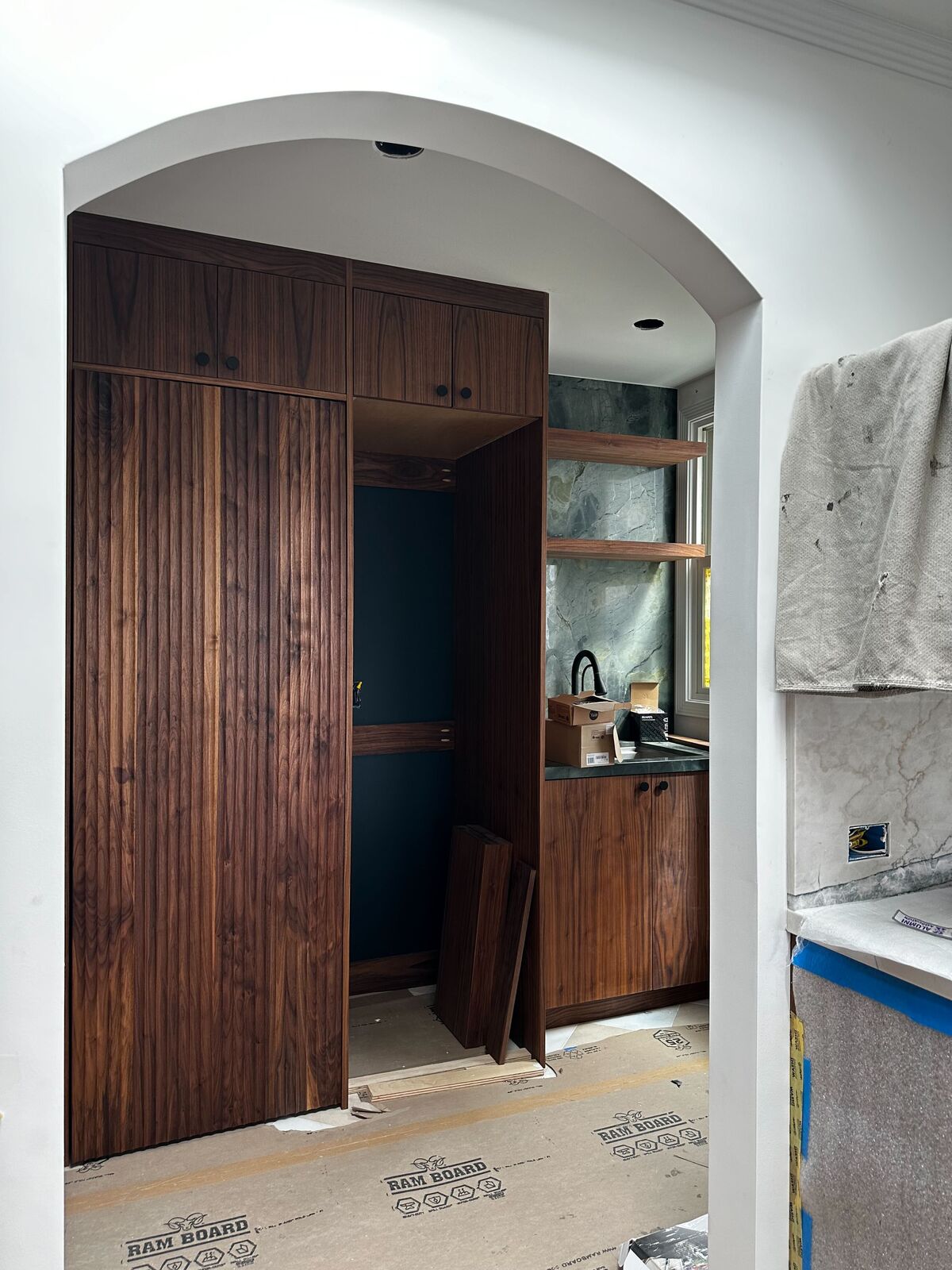
Kitchen remodels consistently return 50 to 80 percent of their cost at resale, depending on scope and market. In the Bay Area, where the median home price is well over $1 million, the return can skew even higher. And within a kitchen remodel, cabinets are the single largest line item, typically accounting for 30 to 40 percent of the total budget.
That means the cabinets you choose have an outsized impact on both how the kitchen looks and how much value it adds. The difference between stock cabinets and custom cabinetry isn't just aesthetic. It shows up in appraisals, buyer perception, and how long your kitchen holds up over time.
Why cabinets matter more than anything else in the kitchen
Countertops get a lot of attention. So do appliances. But cabinets define the kitchen. They establish the visual style, determine the layout, and control how much storage the room actually offers. When a buyer walks into a kitchen, the cabinets are the first thing they register, even if they don't realize it.
A kitchen with solid, well-built cabinets feels intentional. A kitchen with warped doors, misaligned drawers, or visible filler strips feels neglected. Buyers notice the difference immediately, and it shapes how they perceive the rest of the house.
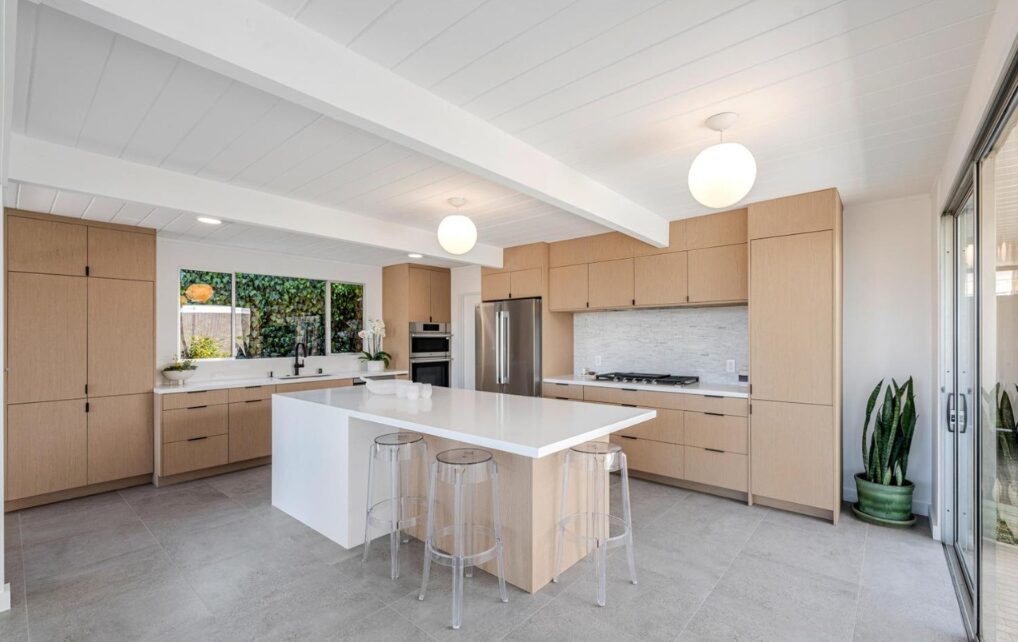
What actually adds value
1. Construction quality
The material inside the cabinet box matters as much as what's on the outside. All-wood construction, using plywood or solid wood for the box, shelves, and drawer components, holds up over decades. Particleboard and MDF are cheaper, but they swell near moisture, lose their grip on screws, and degrade faster in the high-use environment of a kitchen.
European-style frameless construction is increasingly expected in modern kitchens. It maximizes interior space, creates clean sightlines, and signals a level of quality that appraisers and buyers both recognize. At DodiHome, every cabinet uses 3/4" maple or birch plywood for the box, regardless of the door style or finish.
2. Custom fit
Stock and semi-custom cabinets come in fixed sizes. When those sizes don't match your kitchen, the gaps get filled with filler strips, panels, and workarounds. The result is wasted space and a kitchen that looks like it was adapted rather than designed.
Custom cabinets are built to the exact dimensions of your room. Every inch of wall space becomes usable storage. Corners are handled cleanly. The cabinets reach the ceiling if that's what the design calls for. This kind of precision is especially important in older Bay Area homes, where walls are rarely perfectly square and ceiling heights vary. You can see examples of how this looks in practice in our project gallery.
3. Functional upgrades
Soft-close hinges and drawer slides used to be a premium feature. Now they're expected. Beyond that, buyers respond well to thoughtful storage solutions: pull-out organizers, built-in drawer dividers, appliance garages that keep countertops clear, and pull-out trash and recycling bins. These are the kinds of features that make a kitchen feel like it was designed by someone who actually cooks in it.
The best part is that these upgrades cost relatively little compared to the overall cabinet investment, but they have a disproportionate impact on how functional the kitchen feels during showings and open houses.
4. Materials that hold up
Solid wood doors, quality veneers, and durable finishes age well. Laminate over particleboard can peel, chip, and discolor within a few years, especially in a kitchen that gets daily use. When buyers see peeling laminate, they mentally add a cabinet replacement to their renovation budget, and your offer price drops accordingly.
Choosing materials that look good in year ten, not just year one, is one of the simplest ways to protect your investment. DodiHome offers a range of materials and finishes that are selected specifically for long-term durability.
5. Timeless design over trends
Flat-panel and shaker door styles have been popular for over a decade because they're clean, adaptable, and don't date themselves. Neutral finishes, whites, natural wood tones, and warm grays, appeal to the broadest range of buyers. Bold colors and highly ornate details can work in the right context, but they also narrow your audience at resale.
The goal isn't to be boring. It's to make choices that age well and give the next owner room to make the kitchen their own with smaller changes like hardware, lighting, or paint.
What doesn't add value
Over-customizing for personal taste is the most common mistake. A cabinet system designed around one person's very specific workflow or aesthetic preference can feel limiting to buyers rather than impressive. The same goes for trendy finishes that look dated within a few years.
Cheap refacing, replacing just the cabinet doors while leaving the original boxes in place, rarely fools anyone. Inspectors and savvy buyers can tell the difference between a full cabinet upgrade and a cosmetic fix. If the boxes are deteriorating, new doors just delay the problem. And the cost of refacing often gets close enough to new custom cabinets that it's worth doing the job right.
Kitchen remodel ROI in the Bay Area
In markets where the average home sells for $1 million or more, buyers expect a kitchen that matches the price point. Stock cabinets from a big-box store can feel out of place in a home at this level. Custom cabinets aren't an extravagance in the Bay Area. They're a baseline expectation for many buyers, particularly in competitive neighborhoods where multiple offers are common.
The math works differently here than in lower-cost markets. When your home value is high, the percentage return on a kitchen remodel translates to a larger dollar amount. A kitchen that costs $40,000 to remodel and returns 70 percent at sale puts $28,000 back in your pocket, and that's before accounting for the fact that a well-done kitchen can also help your home sell faster.
DodiHome builds every cabinet locally in Milpitas, California. That means predictable timelines, typically 2 to 8 weeks from order to delivery, and the ability to handle adjustments or service locally rather than shipping parts overseas. You can see exactly how the process works from design through installation.
Where to start
If you're planning a kitchen remodel with resale value in mind, start with the cabinets. They set the tone for everything else, from countertop selection to appliance placement to lighting design. Get the cabinets right, and the rest of the kitchen tends to fall into place.
DodiHome's design app lets you lay out your kitchen and see real-time pricing on custom cabinets, so you can understand the investment before committing. It takes about 15 minutes to get a realistic picture of what your project would cost.