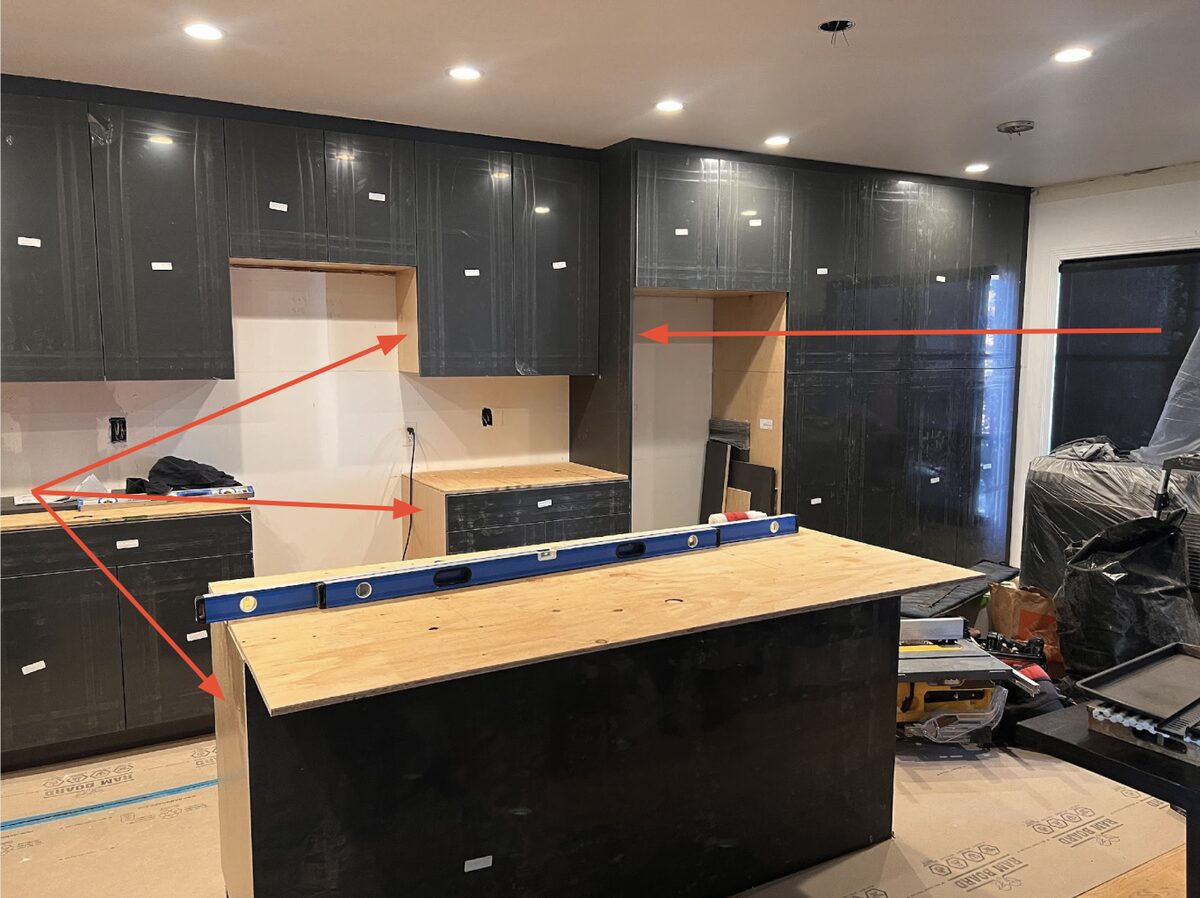
This guide covers what's in the delivery, how each component fits together, and the details that make the install go quickly. If something here doesn't match what you're seeing on the truck, call us before you start — it's easier to sort out before pieces are mounted.
Cabinet construction
Every DodiHome cabinet is European-style frameless: no face frame, full access to the interior, and clean alignment between doors and drawer fronts. The materials are consistent across every order.
Cabinet body
- Sides: ¾" (19mm) hard maple plywood
- Back: ¼" (5mm) plywood
- Color: natural maple
Drawers
- Sides: ½" (14mm) plywood
- Bottom: ⅜" (9mm) plywood
- Color: natural maple
Hardware
- Soft-closing hinges and full-extension drawer slides
- Blum, Salice, or Grass — depending on availability for your order
Cabinet sides and finishing panels
DodiHome cabinets ship with unfinished sides. Any exposed end — at the end of a run, at a tall cabinet, or against an island — needs a finishing panel applied on top. A few things to keep in mind:
- Finishing panels are ¾" thick.
- They ship at least 1" wider than the cabinet box, so you have material to scribe.
- Align the panel face with the cabinet door face, not the cabinet box. This is what gives the finished run a flush, built-in look.
Aligning fillers
Fillers close the gap between cabinets and walls, appliances, or other obstructions. Done right, they read as part of the cabinetry rather than a strip of trim. Three rules:
- The face of the filler should align with the cabinet door or drawer face, not the cabinet box.
- Install a plywood backer filler attached to the cabinet body first.
- Attach the finished filler to the front of that backer.
The backer-and-face approach hides the joint and gives you something solid to anchor into.
Base and tall cabinets: legs and toe kicks
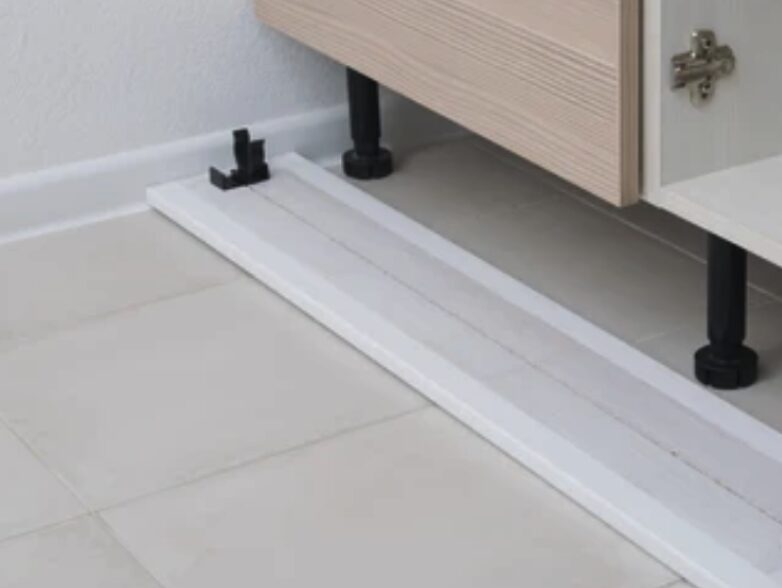
Every base and tall cabinet ships with adjustable legs. They give you ½" or more of vertical play, which is what you'll use to level across a floor that isn't perfectly flat. Once the boxes are level and joined, the toe kick snaps onto the legs from the front — no scribing to the floor required.
Labeling and packaging
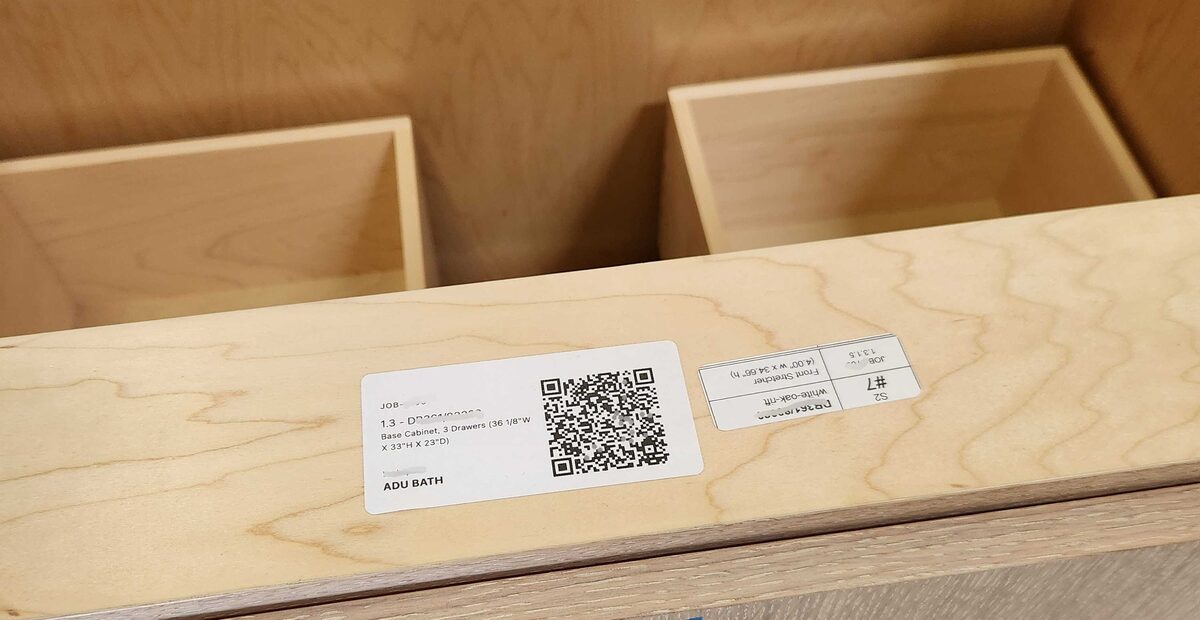
Every cabinet is labeled before it leaves the shop. The label lives on the back of the box or on a stretcher and tells you four things:
- Room and run: e.g. Kitchen :: Window Wall
- Cabinet code: e.g. SB36 for a 36" sink base
- Description: e.g. Sink Base 36"W × 34½"H × 24"D
- Order reference so we can trace a part if you need a replacement
Lay out the boxes by room and run before you start mounting. It's faster than reading labels off stacked cabinets in a garage.
Shipping protection
Standard packaging is shrink wrap on pallets. Doors and finishing materials get a protective film over the face that stays on during install — peel it after the surrounding work is done, not before. For long-distance shipments, cabinets may be crated for extra protection. Either way, you'll get packaging details before the truck rolls.
Inspect the load before signing for it. Note any visible damage on the delivery paperwork and photograph it — that's what we need to ship replacements quickly.
Questions during your install
If something doesn't fit, the label doesn't match the plan, or a part shows up damaged, get in touch before you improvise. We can usually answer a question over the phone or replace a part faster than you'd expect.
- Email: info@dodihome.com
- Phone: (408) 668-3634