Custom cabinets are an investment, and a small amount of routine care goes a long way. Most damage we see in the field doesn't come from time or use — it comes from the wrong cleaner, the wrong cloth, or a mistake during a remodel that the homeowner didn't know to prevent.
This guide covers what to do, what to avoid, and how care changes by finish. It's written for homeowners and contractors alike. If you're working on a renovation, the construction section is the one to read closely.
Daily cleaning
For everyday wiping, less is more. A soft microfiber cloth and warm water handles the majority of kitchen messes. For anything stickier, add a few drops of mild dish soap to the water and use that as your cleaning solution.
The two rules that matter:
- Wipe with the grain or pull direction, not in circles. Circular wiping can leave subtle marks on matte and super-matte finishes that build up over time.
- Dry the surface immediately after cleaning. Don't let water sit on edges, seams, or around the sink base. Standing water is the single most common cause of finish damage in custom cabinets.
That's the whole routine. You don't need a specialty cabinet cleaner, and in most cases you shouldn't use one.
How to remove grease from kitchen cabinets
Grease buildup is the most common cleaning challenge in a kitchen, especially on cabinets near the range and exhaust hood. The good news: grease comes off easily if you catch it early and use the right approach.
For light grease (regular cooking residue): warm water with a few drops of mild dish soap. Dampen a microfiber cloth, wipe with the grain, then dry immediately with a second clean cloth.
For heavier grease (buildup near the range): mix one teaspoon of dish soap with one cup of warm water. Apply with a soft cloth, let it sit for 30 to 60 seconds to break the grease down, then wipe and dry. Don't scrub. The dwell time does the work.
For stubborn grease near the hood or behind a cooktop: a 50/50 mix of warm water and white vinegar can help, but only on factory finishes that are sealed. Test in an inconspicuous spot first. Never use vinegar on Rubio Monocoat or other natural-oil finishes — it can degrade the protective layer.
The fastest way to keep grease off your cabinets is to wipe down the cabinet faces near the range once a week with the soap solution above. Grease that accumulates for months becomes much harder to remove than grease wiped down weekly.
What to avoid
The wrong cleaner can do more damage in five minutes than ten years of normal use. Avoid:
- Abrasive cleaners — Comet, Soft Scrub, Bar Keepers Friend. These scratch finishes microscopically and dull the surface permanently.
- Ammonia- or bleach-based products — Windex, most multi-surface sprays, bathroom cleaners. Ammonia breaks down finishes; bleach discolors them.
- Scouring pads, steel wool, and Magic Erasers. Magic Erasers are micro-abrasives and will dull matte finishes quickly even though they feel soft.
- Spray cleaners applied directly to the cabinet. Always spray onto the cloth, not the surface. Spray drift gets into seams and hinges.
- Furniture polish and silicone-based products. They build up over time and make future refinishing or touch-up work much harder.
- Standing water on seams, edges, or around the sink base. The most preventable damage we see in service calls.
Cleaning by finish
Different finishes call for different care. Knowing which finish you have is the first step. If you're unsure, our team can confirm based on your project records — just reach out.
Matte and super-matte finishes
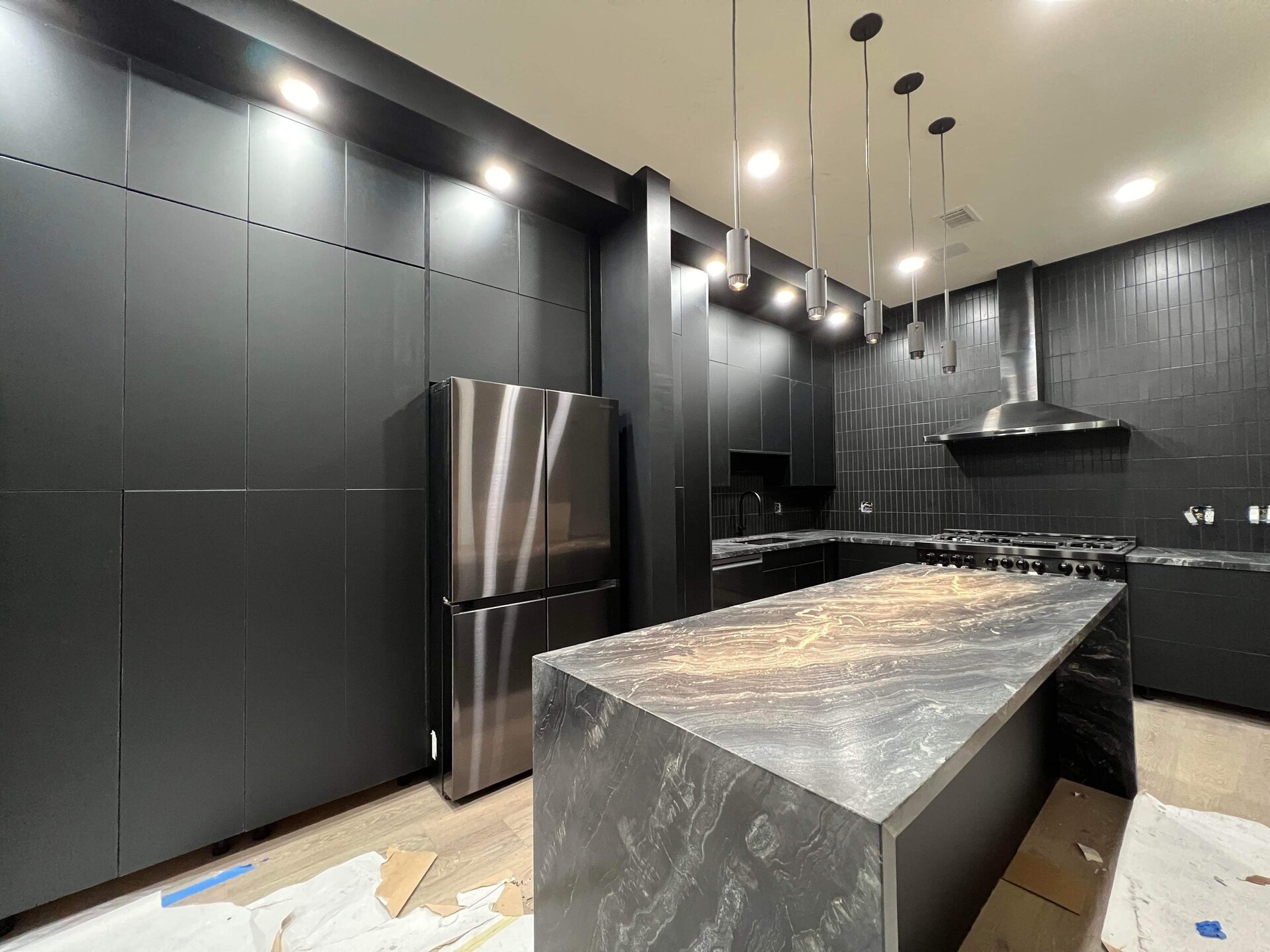
Super-matte finishes (like Fenix and other anti-fingerprint surfaces) look beautiful but reward gentle handling. Use light, even strokes — aggressive wiping can cause uneven sheen patches over time as the surface micro-texture wears unevenly.
Most super-matte finishes are self-healing for light scratches. Apply gentle heat (a warm cloth, not boiling water) and the surface will recover. For stubborn marks, the manufacturer usually publishes a care guide specific to that material — ask us and we'll point you to the right one for your cabinets.
Painted cabinets (including white)
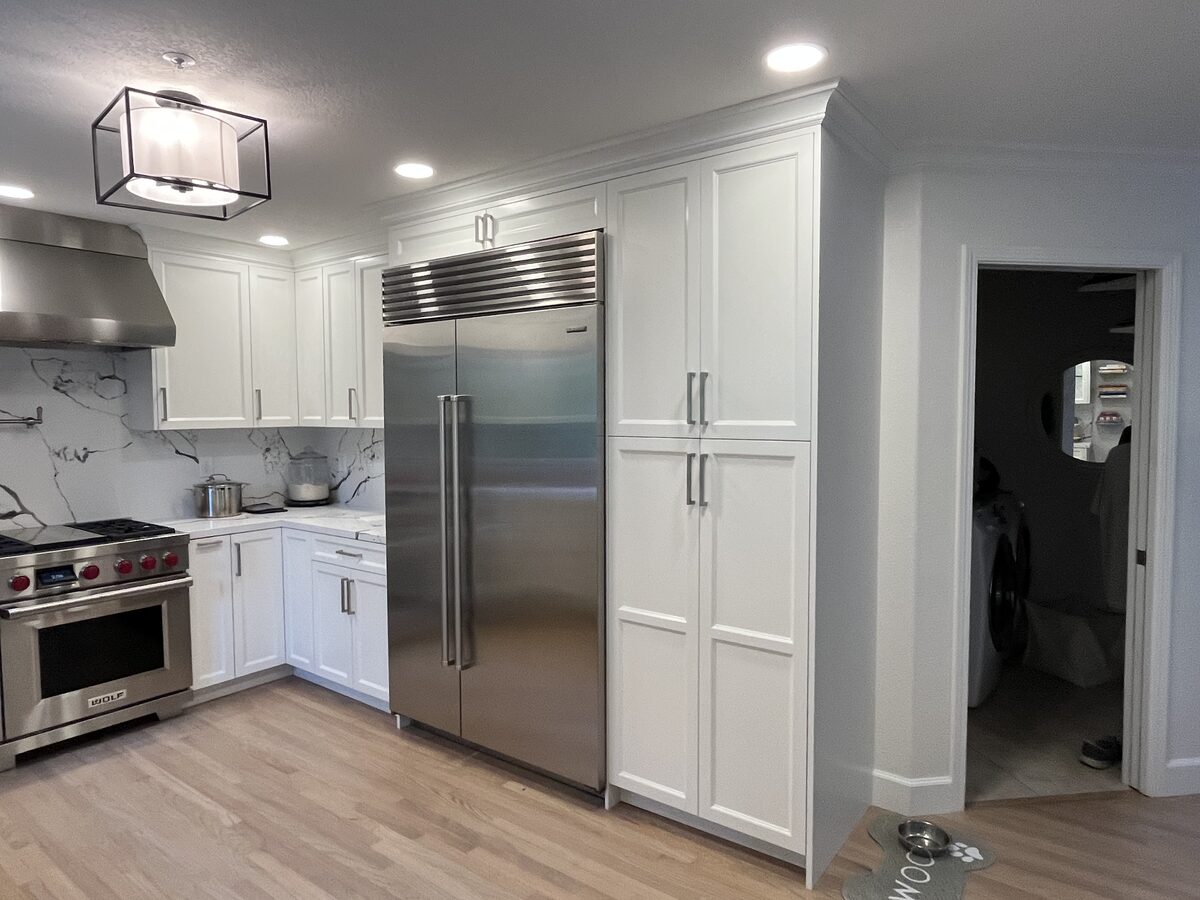
Painted finishes — including white painted cabinets, which are one of our most popular finishes — continue to cure for several weeks after delivery. During that period, the paint is fully usable but not at full hardness. Be gentle: avoid impact, harsh cleaning, and heavy contact for the first three to four weeks.
After full cure, painted cabinets are durable and easy to clean. Stick to the daily-cleaning routine above. For white painted cabinets specifically, light marks and scuffs near high-touch areas (drawer fronts, the door near the trash pullout) are normal — wipe with the soap solution and they'll come off.
Don't use Magic Erasers on painted cabinets. They will dull the paint sheen in a way that's visible side-by-side with the rest of the cabinet.
Natural wood and veneer
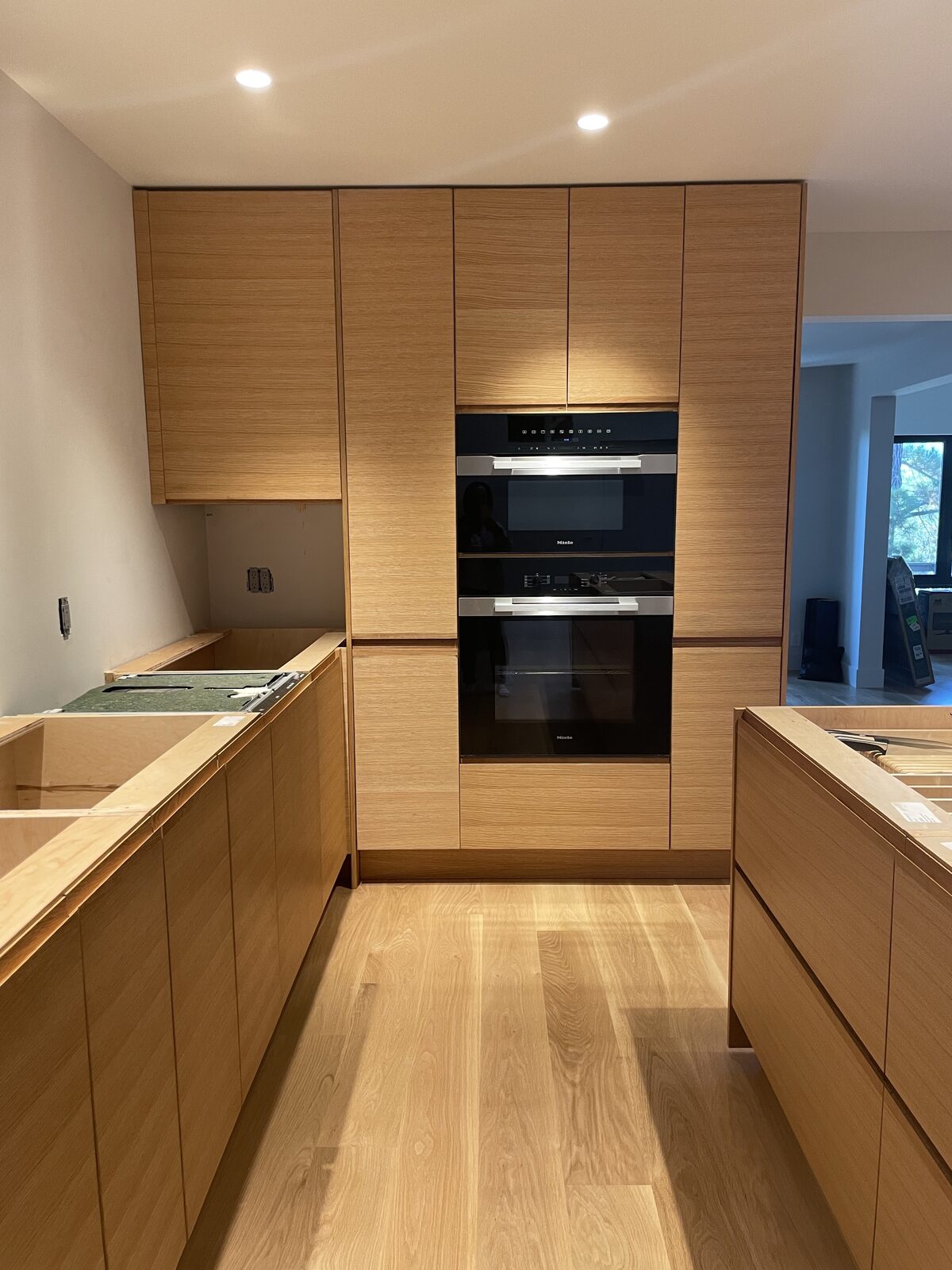
Wood and veneer cabinets — white oak, walnut, Shinnoki, and similar — need the most care around moisture. Grain can raise slightly with water exposure, which is a natural property of wood and not a defect. The fix is prevention: wipe spills immediately and never let water pool on horizontal surfaces or seams.
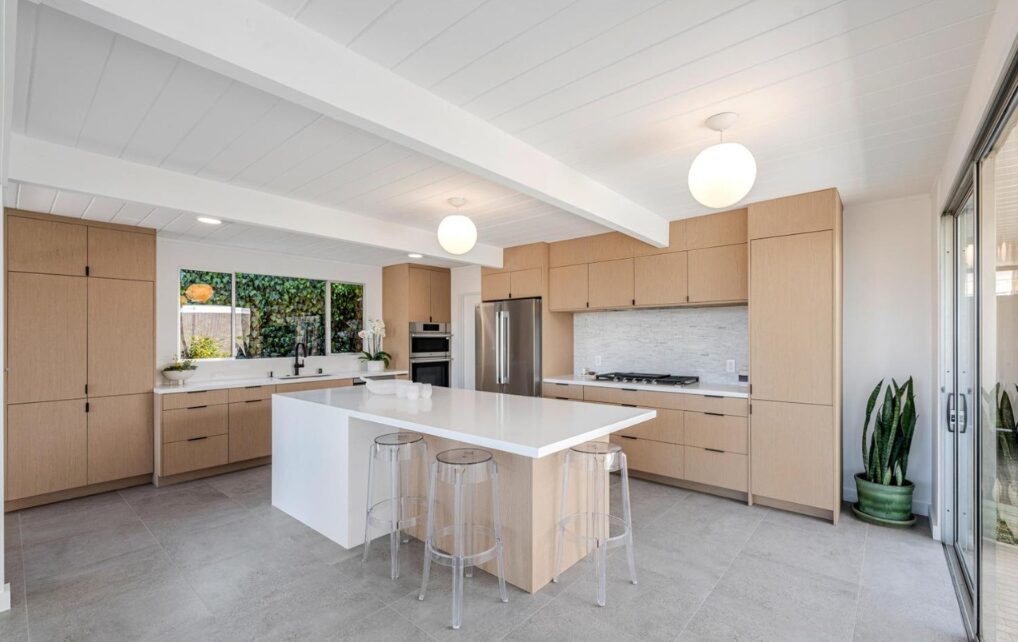
For cleaning wood kitchen cabinets, the same microfiber-and-soap approach works. Always wipe with the grain. Avoid wood polish unless the finish is specifically rated for it — most modern factory finishes don't need polish and can be made worse by it.
If you have a panel-ready appliance with a wood front (refrigerator, dishwasher), pay extra attention to seam edges where water from the appliance can wick into the wood. A dry cloth pass after every dishwasher run goes a long way.
Rubio Monocoat

Rubio Monocoat is a natural oil finish that bonds at the molecular level with the wood — it's what gives walnut and white oak cabinets their characteristic warmth without the plasticky look of polyurethane. It also has specific care requirements.
Do:
- Clean with warm water and a small amount of pH-neutral soap (Rubio sells their own Surface Care for this purpose, but a mild dish soap works)
- Wipe with the grain
- Dry immediately
Don't:
- Use silicone-based products of any kind — Pledge, most furniture polishes, many "wood cleaners"
- Steam clean — the heat and moisture combination breaks down the oil bond
- Use harsh solvents, ammonia, or vinegar
- Wax the surface — Rubio is designed to be the only finish, not a base for other treatments
If a section of Rubio Monocoat becomes dry or worn (often the area in front of the sink or on a high-use cabinet edge), Rubio sells a Refresh product that restores the protective oil. It's a 15-minute job per affected area and dramatically extends the life of the finish. If you'd like guidance on applying it, contact us — we can advise based on your specific finish color and project.
During construction and renovation
This is the section most homeowners and contractors miss. Cabinets are most vulnerable not during years of use, but during the few weeks of an active renovation when other trades are working around them. A finished cabinet face takes seconds to scratch and weeks to repair properly.
If you're a contractor working on a project with new Dodi cabinets — or if you're managing your own remodel — these rules protect the warranty and avoid the most common cabinet damage we see:
- Don't lean tools, ladders, or materials against cabinet faces or doors. Even a few minutes of contact with a metal edge can leave a visible mark. Use a wall or sawhorse instead.
- Cover cabinet surfaces during plastering, tiling, and painting. Use plastic film over door faces and Ram Board (or equivalent) over any installed countertops. Tape carefully — some painter's tapes can pull finish off matte and painted cabinets if left in place for more than a few days.
- Remove drywall dust with a dry microfiber cloth only during active construction. Wet wiping during dust-heavy work just turns the dust into a fine paste that's much harder to remove.
- Keep paint overspray, adhesives, and solvents away from all cabinet surfaces. Spray paint and adhesive overspray can permanently bond to finishes. If overspray happens, do not try to remove it yourself — contact us first.
- Do not adjust door hinges or drawer slides. They are pre-calibrated at delivery. Adjustments by other trades are a frequent source of warranty calls and can void coverage on the hardware.
If you're a general contractor or remodeler working with DodiHome cabinets regularly, our contractor program page has more detail on installation handoff, hardware specifications, and the support we offer trade partners during a project.
Hardware
Hinges, slides, and handles are the most-touched parts of any cabinet and the parts most likely to need light attention over time.
- Handles and pulls: tighten periodically if they loosen. A flathead or Phillips screwdriver is all you need. Clean them with mild soap and water — not metal polish unless the manufacturer specifies it.
- Hinges and slides: these are pre-calibrated and rarely need adjustment. If a door is rubbing or a drawer is sticking, contact us before adjusting it yourself. The wrong adjustment can cause worse problems and most issues are covered under warranty.
- Soft-close mechanisms: if a soft-close stops working or a door starts slamming, that's almost always a hardware issue we can address. Don't try to disassemble it.
Moisture and heat
Two environmental factors damage cabinets more than anything else: prolonged moisture and direct heat.
Moisture: the highest-risk areas are around the sink base, behind the dishwasher, and near any range that produces steam. Make sure ventilation is working — a properly vented range hood and a dishwasher vent that actually clears steam are the easiest preventive measures you can take. Wipe spills immediately, especially around the sink base where water can wick into seams unnoticed.
Heat: avoid placing hot pans, coffee makers with steam vents, or kettles directly against cabinet faces. The heat itself can damage finishes, and the rising steam is worse than dry heat. Pull-out cutting boards and trivets exist for a reason.
When something doesn't look right
If you notice damage, a finish that's not behaving the way you'd expect, or any change in how a door or drawer operates — contact us before attempting a fix. We can advise on the right approach for your specific cabinets, and in many cases the repair is covered under warranty if it's addressed correctly from the start.
Email info@dodihome.com, use the contact form, or check the full terms at our warranty page. Damage from improper cleaning products, unauthorized adjustments, or construction misuse may not be covered, but we'd always rather hear about an issue early and help you get to a good outcome than have you try a fix that makes things worse.
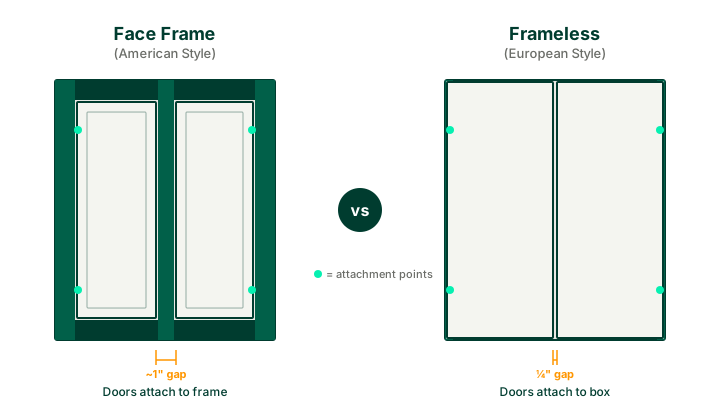
If you'd like to learn more about how we build our cabinets, see our cabinets and finishes or read our breakdown of European vs. American construction — both pages give context on why these care rules exist.